 GovCon Wire
Your Direct Source for Government Contracting News

Tuesday, November 03, 2026 11:00am-12:00pm EST Virtual, ON24
Military logistics increasingly depends on moving data as reliably as it moves personnel, equipment, and supplies. That requirement begins at the installation and extends across ports, depots, airfields, logistics hubs, mobile assets, and forward operating environments. Yet much of the infrastructure supporting these missions was not designed for the distributed, data-intensive, and increasingly contested operating environment the Department of War faces today.
In this webinar, defense, infrastructure, and connectivity leaders will examine how modernizing base infrastructure and resilient communications architectures can strengthen contested logistics and enable gray-zone operations.
The discussion will explore how installations can modernize critical communications infrastructure while maintaining operations, integrating legacy systems, and preparing for emerging mission requirements. Panelists will examine how secure, resilient connectivity can extend from the base to distributed personnel, assets, sensors, autonomous systems, and edge applications, including in environments where traditional communications are degraded, intermittent, or unavailable.
The panel will also discuss how private LTE and 5G, Wi-Fi, fiber, satellite, edge computing, and other transport technologies can serve as components of a broader, technology-neutral architecture. Topics will include interoperability, mobility, cybersecurity, infrastructure resilience, edge operations, and reduced dependence on any single network or transport path.
Attendees will leave with a practical framework for treating connectivity as mission infrastructure rather than a collection of individual technology projects. The discussion will demonstrate how modernizing infrastructure at installations and operational nodes can lay the foundation for resilient logistics, distributed operations, and mission continuity from the base to the tactical edge.

Sarah Campbell is Chief Operating Officer of Future Technologies, a North American wireless solutions provider and systems integrator serving industrial, enterprise, and defense customers. She leads enterprise-wide operations, aligning strategy, people, processes, and systems to drive organic growth, margin expansion, and scalable performance. Previously, Sarah served as Associate Vice President of Research for Defense and Security and Head of Operations at George Mason University. She led efforts to elevate and coordinate the university’s defense and national security research portfolio while building the administrative and operational infrastructure needed to support continued growth. Before joining George Mason, Sarah was Chief of Staff and a Principal Faculty member at the University of Maryland’s Applied Research Laboratory for Intelligence and Security (ARLIS). She helped establish and scale ARLIS as one of the nation’s fastest-growing Department of Defense University Affiliated Research Centers, supporting an organization of approximately 240 employees and more than $140 million in active contracts. Her responsibilities spanned research administration, organizational operations, process development, and institutional growth. From 2020 to 2022, Sarah served on an Intergovernmental Personnel Act assignment to the National Geospatial-Intelligence Agency’s research component as Director of Strategic Partnerships and Communications. In this senior leadership role, she directed strategic communications, stakeholder outreach, legislative affairs, and international engagement for NGA Research. She also spearheaded NGA’s first technology accelerator, designed to fund, mentor, and advance emerging geospatial technologies. Earlier in her career, Sarah was a Senior Program Manager at SAIC, providing strategic support to the establishment of the Office of the Under Secretary of War for Research and Engineering. From 2012 to 2017, she led the Office of International Cooperation at the Defense Advanced Research Projects Agency. She also supported the Defense Threat Reduction Agency within its research and development enterprise. Sarah began her career as a public policy analyst with the geopolitical intelligence firm Stratfor, where she advised Fortune 500 companies on public policy and geopolitical risk. She holds a bachelor’s degree in political science from the University of Mary Washington and a master’s degree in international commerce and policy from George Mason University’s Schar School of Policy and Government. Sarah serves on the Intelligence and National Security Alliance Advisory Committee and is currently an affiliate faculty administrator at George Mason University.
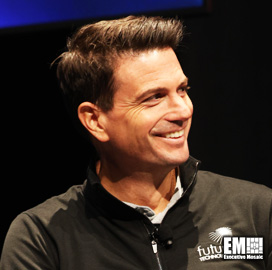
Peter Cappiello is the CEO of Future Technologies Venture, LLC, a leading systems integrator with more than 20+ years of experience connecting and securing mission-critical industrial infrastructure. Having designed, implemented, and supported networks in some of the most challenging Manufacturing, Energy, Transportation, Utility, and Government environments, Peter brings a pragmatic, process-driven perspective to navigating today’s overwhelming mix of connectivity options—5G, Wi-Fi, fixed wireless, fiber, satellite, and legacy systems. He understands how a “one-size-fits-all” approach, over-engineering, or “good enough” decisions can quietly undermine reliability, security, and ROI. Peter’s Living Lab–based engagement model helps customers quickly see where their current path may be sub-optimal and how right-sized architectures can safely and efficiently support modernization initiatives such as automation, robotics, AI, and edge computing. Known as a collaborative, business-first problem solver, Peter has guided hundreds of customers toward secure, scalable networks that genuinely match their operational realities. A brief conversation with Peter often surfaces risks—and opportunities—leaders didn’t realize were shaping their future.

Rich Johanning is the Vice President of Government Solutions at Future Technologies Venture, LLC, leading the deployment of advanced communication networks for federal clients. With over 30 years of experience spanning tactical operations and executive leadership, Rich has specialized in resilient, "dirt-to-cloud" private 5G and LTE architectures tailored for contested, DDIL environments. As a U.S. Air Force veteran with a background in combat communications and network intelligence, he intimately understands gray zone requirements. Rich has served as Technical Director of the Joint Electronic Warfare Center and Director of the Initiatives Group for the USD(I&S), alongside over six years as a senior Air Force Civilian. Holding an MBA in IT Management, Rich has dedicated his career to bridging physical edge transport with secure, multi-network architectures, ensuring continuous mission readiness and reliable data transport for the Department of War.

Mr. Marlan Macklin is the Deputy Principal Director for FutureG within the Office of the Under Secretary of War for Research and Engineering (OUSW(R&E)). The FutureG Office guides U.S. Department of War (DoW) research, funding, and execution of programs that develop capabilities leveraging 5G and future generation wireless technologies. In his current position, Mr. Macklin is responsible for ensuring the office’s strategic alignment, providing program execution oversight, and overseeing budget execution. Prior to joining OUSW(R&E), Mr. Macklin served in the U.S. Mission to NATO as Chief of the Communications & Electronics Division and Deputy to the Director for Armaments, Communications & Electronics. The directorate provided technical and political-military advice to the U.S. Ambassador to NATO, the Secretary of Defense Representative in Europe, and DoW leadership for equities including acquisition, C3, innovation, and emerging technologies. Mr. Macklin served as a Country Programs Manager in the International Cooperation Directorate of the Office of the Under Secretary of War for Acquisition and Sustainment (OUSW(A&S)) and former Office of the Under Secretary of War for Acquisition, Technology & Logistics. He worked closely with DoW, interagency, defense industry, and foreign governments to advance complex cooperative acquisition programs, negotiate international research and development agreements, and address Congressional reporting requirements for activities with allies and partners in the Indo-Pacific and Middle East. During the pandemic, Mr. Macklin served as the OUSW(A&S) representative on the Secretary of Defense’s COVID-19 Task Force supporting DoW’s contributions to domestic and international COVID-19 response activities. During his time in the Office of the Deputy Assistant Secretary of the Army for Defense Exports & Cooperation, Mr. Macklin oversaw and advised on international security cooperation activities including Foreign Military Sales, security assistance policy, armaments cooperation, and defense technology transfers. Throughout his career, he held positions in other U.S. Army acquisition organizations including the Program Executive Office for Command, Control, Communications-Tactical; the Communications-Electronics Command Life Cycle Management Command; and the Army Materiel Command.
11:00am - 12:00pm EST
Webinar Discussion with Sarah Campbell, Peter Cappiello, Richard Johanning and Marlan Macklin